

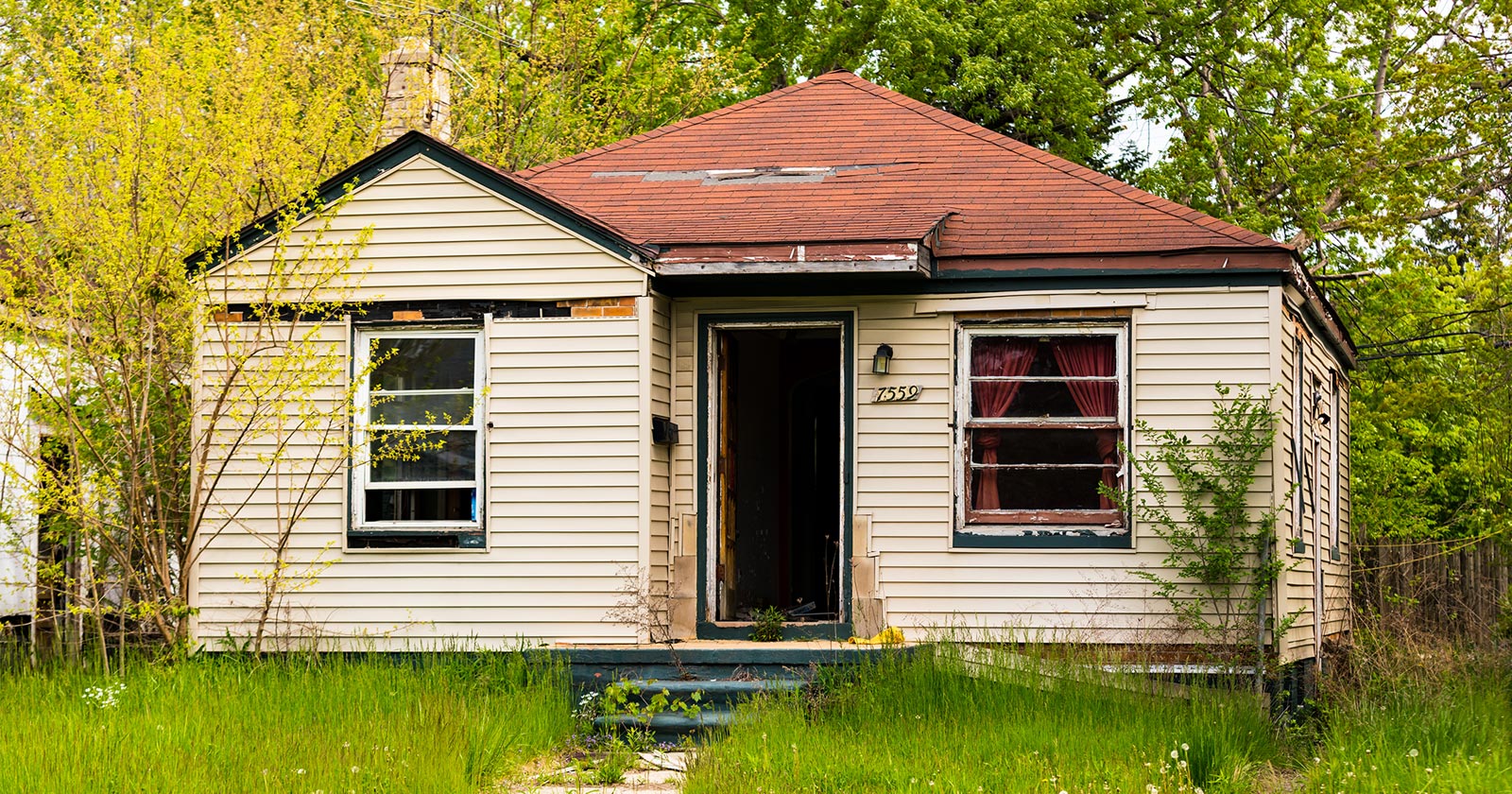
Not all flips are created equal. Some are clean, cosmetic rehabs—new floors, fresh paint, updated fixtures—and others are full-blown rebuilds that test an investor’s skill and patience.
But every so often, a deal comes along where the rehab budget outweighs the purchase price. Maybe you’re buying a distressed property for $100,000, but the renovation will cost $150,000 or more.
That kind of setup is what the industry calls a “lopsided deal.”
These projects can be risky, but also extremely profitable when done correctly. Understanding how lenders view these deals, when they can work, and how to approach them strategically can help you turn a seemingly “imbalanced” opportunity into a success story.
At Finance of America Commercial, we regularly evaluate Fix and Flip projects that don’t fit the cookie-cutter mold. Here’s how to recognize a lopsided deal, why it happens, and what to consider before taking one on.
Understanding What Makes a Deal “Lopsided”
A lopsided deal occurs when the cost to renovate a property is greater than the price you paid for it.
This isn’t automatically a red flag, but it does require extra scrutiny.
Most traditional lenders are more comfortable when renovation costs are less than or equal to the purchase price. It signals a more stable deal structure with lower risk exposure. When the rehab cost exceeds the acquisition price, it can raise questions about feasibility, value, and execution.
Example:
- Purchase Price: $120,000
- Rehab Budget: $180,000
- Total Project Cost: $300,000
- After-Repair Value (ARV): $475,000
At first glance, this looks heavily weighted toward construction. But if the numbers work—and you can justify the scope, experience, and ARV—this deal could still be profitable and fundable.
Why Lopsided Deals Happen
There are several reasons why the rehab cost might exceed the purchase price, and not all of them are bad. In many cases, it simply means you’ve found a property in major disrepair that needs a complete transformation.
Common Scenarios
- Severely Distressed Properties
Homes that have been vacant, vandalized, or neglected for years often need extensive work—new plumbing, electrical, roofing, and structural repairs. - Historic or Aged Homes
Older homes in desirable areas often need full-system replacements, foundation reinforcement, or compliance upgrades that push budgets higher than the acquisition cost. - Fire, Water, or Mold Damage
Insurance write-offs or damaged properties can sell cheaply but require major remediation and rebuild work. - Full Gut Renovations
Investors aiming to completely reimagine the property (new layout, additions, modern systems) will always see rehab costs climb. - Market Opportunity
Sometimes, investors deliberately buy low in undervalued neighborhoods, knowing they’ll add significant value through premium renovations or reconfigurations.
In other words, lopsided doesn’t always mean bad, it just means more complex.
Can Lopsided Deals Work?
They absolutely can, but they require experience, precision, and the right lender.
A successful lopsided deal typically depends on:
- Strong ARV: The finished property must have enough market value to justify the total project cost.
- Detailed Scope of Work (SOW): Lenders want to see exactly how the rehab budget breaks down and why it’s necessary.
- Experienced Borrower: These projects demand proven management skills to stay on time and on budget.
- Market Validation: Comparable sales (comps) must support the projected ARV in that neighborhood.
If the project pencils out financially and the investor has a solid track record, lenders like FACo can structure the loan appropriately—often based on loan-to-cost (LTC) rather than just purchase price.
How FACo Approaches Lopsided Deals
Here at FACo, we understand that not every property fits a “standard” model. Lopsided deals can make financial sense when the numbers and strategy align.
Our Lending Approach
1. We Evaluate by Loan-to-Cost (LTC)
Instead of capping leverage strictly on the purchase price, we evaluate the total project cost (purchase + rehab). This allows us to fund deals where renovation represents the majority of the investment.
For example:
- Purchase Price: $100,000
- Rehab Budget: $150,000
- Total Cost: $250,000
- We might lend up to 85% LTC max, depending on borrower experience and market conditions.
2. We Focus on Borrower Experience
When a project is heavily rehab-driven, experience is key. Lenders need confidence that you can execute a large renovation efficiently and manage contractors, inspections, and budgets.
3. We Require a Detailed Scope of Work (SOW)
A line-item budget, timeline, and material breakdown are essential. The more comprehensive your documentation, the smoother the underwriting process will be.
4. We Verify ARV Through Appraisal
Appraisers review your SOW and local comps to validate your projected after-repair value. If the ARV supports the total cost, the deal may still work despite being “lopsided.”
5. We Provide Flexible Draw Schedules
Because heavy rehabs require more capital early on, FACo can tailor draw schedules to align with project phases—so you always have liquidity when it matters most.
Why Experience Matters More in These Deals
A heavily rehab-weighted project introduces higher risk: more contractors, more moving parts, and more ways for timelines or budgets to slip.
That’s why lenders like FACo typically prefer seasoned investors with at least 3-4 prior properties for these deals. Experienced flippers understand:
- How to anticipate cost overruns.
- How to sequence trades efficiently.
- How to pull and close permits correctly.
- How to adjust plans midstream without derailing the project.
If you’re newer to investing, you don’t have to avoid these deals altogether, but you may need to partner with a more experienced borrower or start with smaller, cosmetic rehabs first. Once you’ve built a proven track record, lenders will be far more open to funding ambitious, high-rehab projects.
The Role of Loan-to-Cost (LTC) in Lopsided Projects
For most fix-and-flip loans, lenders assess leverage based on loan-to-value (LTV) or loan-to-cost (LTC) ratios.
In a lopsided deal, LTV can be misleading because the property’s as-is value is low, but the total project cost (and ARV) justifies the higher rehab spend. That’s where LTC becomes a more accurate benchmark.
LTC Formula:
LTC = (Loan Amount ÷ Total Project Cost) × 100
For example:
If your total project cost is $300,000 and your loan amount is $255,000, your LTC is 85%—well within standard lending thresholds.
By focusing on LTC, lenders can responsibly finance projects that might look unbalanced on paper but make strong financial sense in practice.
When a Lopsided Deal Doesn’t Work
Not every high-rehab project is fundable or advisable. Be cautious if:
- The ARV doesn’t justify the spend (i.e., total cost is too close to resale value).
- The property is in a declining market with weak demand.
- You’re inexperienced with heavy rehabs or managing contractors.
- The project requires structural reconstruction beyond your budget or timeline.
In these cases, the risk outweighs the potential reward. It’s better to walk away than to tie up capital in a deal that doesn’t cash flow or sell profitably.
How to Strengthen Your Case with the Lender
If you’re submitting a lopsided deal for financing, preparation is everything. Here’s what helps your case:
- Professional Scope of Work (SOW): Include photos, contractor bids, and a clear timeline.
- Permits or Architect Letters: For major structural changes.
- Before-and-After Comparables: Demonstrate achievable resale values.
- Proof of Reserves: Show liquidity in case of overruns.
- Prior Project Examples: Highlight your track record to build lender confidence.
The more detailed your package, the more likely your lender will see the project’s potential, rather than its risk.
FACo: Your Partner for Complex Fix & Flip Projects
At FACo, we know not every deal fits into a neat box. Our underwriting team specializes in evaluating value-add projects where experienced investors can turn challenging properties into profitable outcomes.
We offer:
- Fix & Flip Loans for renovation-driven investments.
- Ground-Up Construction Loans for rebuilds and major additions.
- Stabilized Bridge Loans for short-term transitions or repositioning assets.
Whether your project is cosmetic or complex, our goal is the same: to fund deals that make sense and help investors scale sustainably.
Final Takeaway
A lopsided deal isn’t automatically a bad deal. When managed properly, it can be one of the most lucrative types of fix and flips—transforming distressed assets into high-value properties.
The key is preparation, experience, and a lending partner who understands the numbers behind the story.
At FACo, we look beyond the surface. If your project’s total cost aligns with its ARV and your team has the experience to execute, we can structure funding that works for both sides.
Because the best flips aren’t always the simplest; they’re the ones where the investor sees potential where others see problems.
Explore your next opportunity with confidence. Visit our homepage or check out our Fix & Flip Loans to learn how we help fund projects of every shape, size, and scope.