

Below the Surface: Will a Finished Basement Add Value to Your Investment Property?
Share the post:
Share the post:
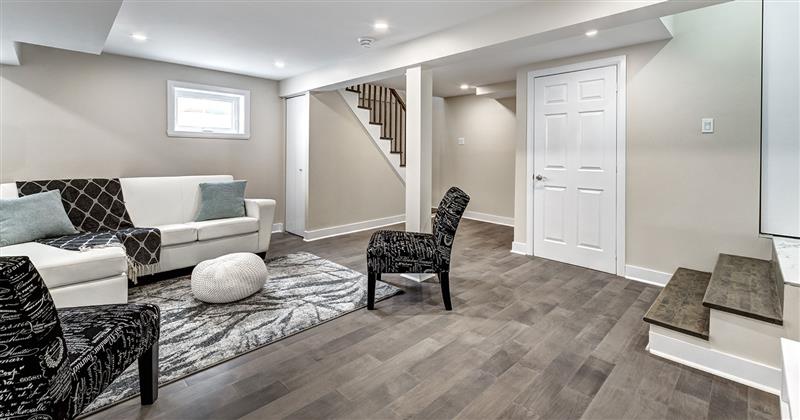
Is it worth it to finish a basement? This is a common question among real estate investors, especially in northern states where basements are often required. Many factors come into play when determining whether or not finishing a basement is worthwhile, including budget, timelines, and your overall business goals–making the question and answer much more complex than simply calculating the ROI of a finished basement.
In this article, we’ll break down the pros and cons of a finished basement and different options to help you truly answer the question: “Will a finished basement add value to my investment property?”
Let’s dive in.
In the United States, finished basements garner a 75% return on investment on average. That means a $100,000 renovation to a finished basement will increase property value by about $70,000. These estimates also depend on the location of a property. For example, on average, Pacific Coast properties have a higher ROI (86%) than New England properties (80%).
Before deciding whether to finish an investment property’s basement, it’s good to weigh the pros and cons of a renovation project.
If a basement renovation is not in your financial cards, it’s best to steer clear. If it is, determine the budget you are willing to spend before shopping. If you’re working with a lower budget, consider cost-effective improvements that still increase the value of a finished basement, including:
If your property’s basement is already usable, minimal updates may be enough to increase property value while saving money and ensuring the home stays in a reasonable price range.
If your property’s basement has structural issues, water damage, or any other hazards, these must be addressed before the home goes to market or any renovations are considered.
A 75% ROI is great for homeowners living in and taking advantage of the basement’s improvements. However, determining how valuable it is for an investor depends on the property’s location, the project’s timeline, and your project goals. For long-term investors who are renting the property and benefiting from the additional space over time, the answer is much more cut and dry.
However, short-term fix and flip and new build investors should research the market and neighborhood trends and communicate with local real estate agents to gauge the ROI, demand, and overall value of a finished basement in that area.
Will a finished basement add value to your investment property? At the end of the day, the answer to this question is yes. However, determining whether renovating a basement is the right choice for you depends on your property’s location and market trends, as well as your budget and overall business goals.
It doesn’t matter how much value a finished basement adds to your property if you lack adequate financing to renovate. Implementing the top ROI finished basement renovations requires flexible and accessible funding. That is why Finance of America (FACo) is regarded as one of the best capital-providing partners in the real estate market.
For over a decade, FACo has provided short- and long-term investors with reliable and versatile lending programs. Our financing options give investors the capital and resources to purchase, rehab, and sell their property at an optimal return.
For home flippers, our Fix and Flip Financing offers:
Yes, a finished basement can increase an investment property's market value by providing additional functional living space. Homebuyers may appreciate features such as entertainment rooms, home offices, guest areas, or exercise spaces. However, the actual increase in property value depends on renovation quality, local buyer demand, building code compliance, and the property's location.
Finished basement renovations can recover a substantial portion of their costs through increased property value, although the return varies by market and project scope. Some industry estimates suggest a cost recovery of approximately 70% to 75%, but this is not guaranteed. Fix and flip investors should compare renovation expenses with recent comparable sales to determine whether finishing a basement supports their profit goals.
Basement finishing costs depend on square footage, existing conditions, materials, labor, and the complexity of the renovation. Basic improvements may cost significantly less than projects involving bathrooms, bedrooms, plumbing, or structural modifications. Investors should also budget for moisture remediation, permits, electrical work, and inspections. Obtaining detailed contractor estimates helps establish a realistic renovation budget.
A partially finished basement can improve a property's appeal by creating usable space without the expense of a complete renovation. Improvements such as updated flooring, lighting, painted walls, and additional storage may attract potential buyers or tenants. However, the value added depends on the quality of the improvements and how the space compares with other properties in the neighborhood.
A finished basement does not always count toward a home's above-grade living area when determining appraisal value or listing square footage. Below-grade spaces are often reported separately, even when fully renovated. Appraisal standards, local regulations, and MLS reporting practices can influence how basement space is classified. Investors should verify these requirements before including finished basement square footage in resale projections.
Popular basement renovation ideas include creating a family entertainment room, home office, guest space, fitness area, or multipurpose flex room. Improving lighting, insulation, flooring, and storage can also make the basement more attractive to buyers. Investors should prioritize practical upgrades that match neighborhood expectations and avoid expensive custom features that may not generate sufficient resale value.
A finished basement may be converted into a rental apartment or accessory dwelling unit (ADU) if local zoning and building regulations permit it. Requirements may include a separate entrance, emergency escape openings, adequate ceiling height, fire safety measures, and appropriate kitchen or bathroom facilities. Investors should confirm permit requirements and rental restrictions before budgeting for a basement conversion.
Yes, qualifying real estate investors may use fix and flip loans to finance eligible basement renovations as part of a residential rehabilitation project. Financing may cover approved improvements such as flooring, electrical upgrades, bathroom additions, and other construction expenses. Finance of America Commercial (FACo) offers fix and flip financing solutions for eligible investment properties, subject to loan program requirements and underwriting approval.
Authored by Bianca Montalvo
SEO copywriter and strategist
This content is for informational purposes only and should not be construed as investment or legal advice. Neither the author of this content nor Roc360 assumes any liability for actions taken or not taken based on information contained herein. Investments involve risk, including potential loss of principal. You should consult a qualified professional before making financial decisions.

Table of contents Rent vs. Sell Calculator Weighing the Pros & Cons of Renting…
Table of contents Top 5 Places to Invest on the East Coast Rent or…
Table of contents Is it Better to Build New Construction or Renovate Existing Homes?…
